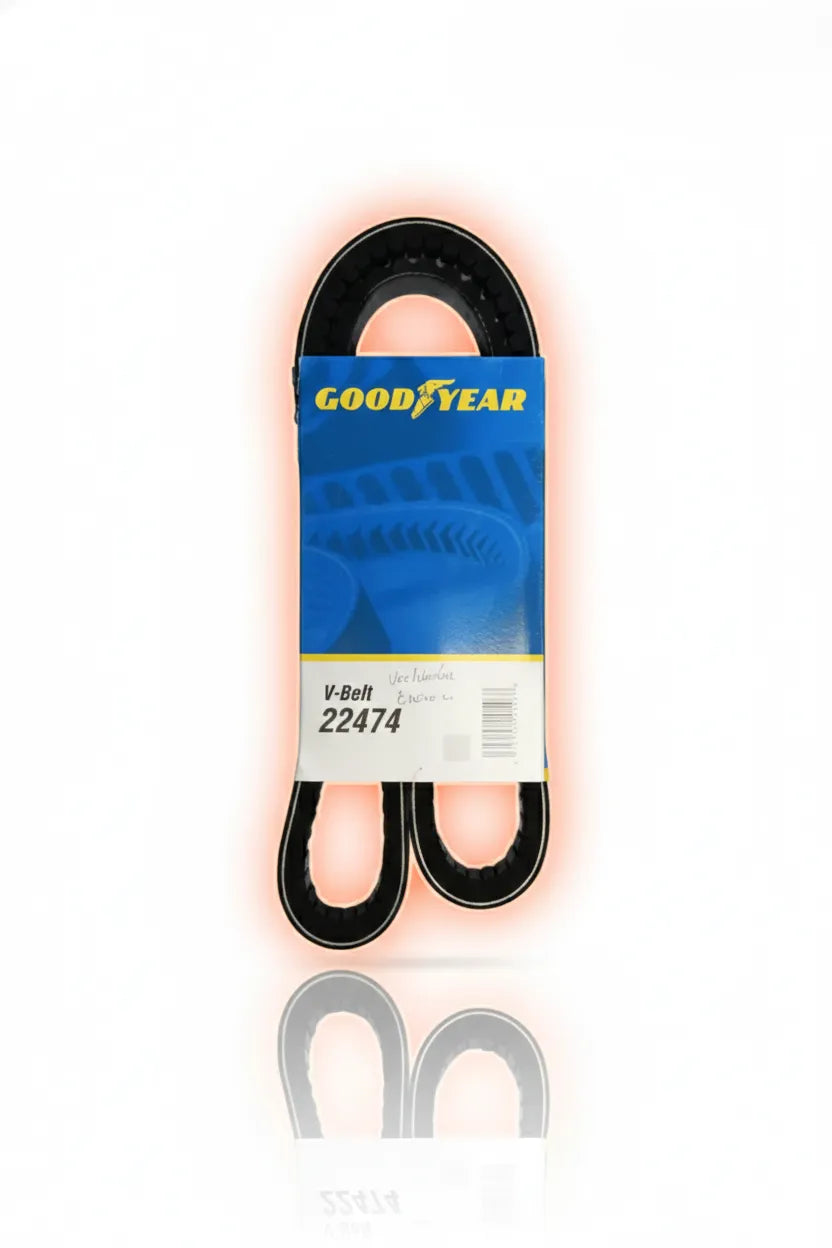
Goodyear Gates Dayco Continental Toothed V Belts
Goodyear Gates Dayco Continental Toothed V Belts
Toothed V-Belts – Maximum Traction for Heavy Duty Work
Ensure maximum power transfer to your engine's auxiliary components with our Cogged V-Belts . Unlike conventional smooth belts, this advanced design allows for greater flexibility and superior heat dissipation. They are the ideal solution for driving compressors, alternators, and fans in engines that face sudden temperature changes and constant loads, guaranteeing that the system never slips.
Product Details
✅ Leading Brands in Toothed V-Belts
- Goodyear/Continental: Pioneers in reinforced rubber technology. Their belts are designed to last thousands of hours of operation without stretching.
- Gates (Heavy Duty Line): Known for their massive load capacity and resistance to engine chemicals and oils
- Dayco Gold Label: Specifically created for diesel engines, where torque is higher and the demands are greater.
💎 Why is the Serrated Design Superior?
- Greater Flexibility: The "teeth" or notches allow the belt to bend more easily around small pulleys, reducing internal stress and preventing cracking.
- Active Cooling: As it rotates, the spaces between the teeth generate an airflow that cools the belt, drastically extending its lifespan compared to smooth belts that "burn out."
- Superior Grip: The trapezoidal profile fits perfectly onto the pulley, eliminating squeaking and ensuring no power loss even on cold starts
- Stretch Resistance: Made with synthetic tension cords that maintain the correct tension for much longer, reducing the need for manual adjustments
🚛 Ideal Applications
- Air Compressors: Constant power transmission without slippage for pneumatic brake systems
- Alternators: Reliable battery charging without squeaking or loss of efficiency
- Cooling Fans: Quiet and efficient operation in engine cooling systems
- Water Pumps: Slip-free power transfer for optimal coolant circulation
- Hydraulic Steering Pumps: Immediate and quiet response in the steering system
📦 Various Presentations and Different Prices
We offer various belt sizes and configurations. Contact our store directly so an expert can identify the exact belt for your application and provide you with the best price.
📋 Technical Specifications
- Available Brands: Goodyear, Continental, Gates, Dayco
- Construction: Reinforced synthetic rubber compound (EPDM)
- Profile: Serrated Trapezoidal (Cogged V-Belt)
- Resistance: Withstands high temperatures and exposure to lubricants
- Key Benefit: Less heat generation and greater transmission efficiency
Storage and Handling
Proper Storage:
- Store in a cool, dry place, protected from direct sunlight
- Keep in its original packaging until the time of installation
- Avoid extreme temperatures (ideally between 10°C and 25°C)
- Do not store near heat sources, electric motors, or ozone generators
- Keep away from oils, solvents, and chemicals
- Store hanging or flat, never folded or twisted.
- Protect from exposure to UV rays that degrade rubber
Safe Handling:
- Do not bend the bands on very small radios during handling
- Avoid twisting or tightly rolling the bands.
- Use clean gloves when handling to avoid contamination with oils
- Do not overstretch the bands during installation
- Check that the packaging is intact before opening
- Visually inspect the belt before installation
- Do not install bands that show cracks, cuts, or deformations.
Rubber Protection:
- Rubber degrades when exposed to ozone and UV rays
- Avoid contact with mineral oils, fuels, and solvents.
- Do not use petroleum-based cleaners on the belts
- Keep the bands away from ozone-generating equipment.
- The shelf life in storage is approximately 3-5 years under optimal conditions.
Before Installation:
- Inspect the belt for damage from shipping or storage
- Verify that the part number matches your application
- Confirm the correct length and profile
- Make sure you have the appropriate tools for installation
- Inspect the pulleys for wear or damage
- Clean the pulleys of oil, grease, and debris
⚠️ Warning: Never work on conveyor belts with the engine running. Always turn off the engine and wait for all components to come to a complete stop before working on the conveyor system.
Compatibility and Applications
Engine Auxiliary Components:
- Air Compressor: For pneumatic brake systems
- Alternator: Generation of electrical energy
- Cooling Fan: Engine Cooling
- Water Pump: Coolant Circulation
- Hydraulic Power Steering Pump: Steering assistance
- Vacuum Pump: For hydraulic brake systems
- Air Conditioning: A/C Compressor
Compatible Motors:
- Cummins: ISX, ISX15, X15, N14, ISM, ISL, ISB
- Caterpillar: C15, C13, C12, 3406E, C7
- Detroit Diesel: DD13, DD15, DD16, Series 60
- Volvo: D11, D13, D16
- Mack: MP7, MP8, MP10
- Paccar: MX-11, MX-13
- International: MaxxForce, DT466, DT570
Common Sizes and Profiles:
- Profile A: For light applications (13mm wide)
- Profile B: Medium applications (17mm wide)
- C-profile: Heavy duty (22mm wide)
- D-profile: Extra heavy duty (32mm wide)
- Variable lengths depending on application (measured in inches or mm)
Operating Conditions:
- Temperatures from -40°C to +100°C
- Exposure to engine oils and lubricants
- Sudden changes in temperature
- Variable loads and frequent starts
- Continuous operation in heavy-duty service
Installation and Maintenance
🔧 Advantages over Conventional Smooth Belts
Many carriers make the mistake of using smooth belts because they are slightly cheaper, but the toothed belts from brands like Goodyear pay for themselves. Because they run cooler, they don't harden or break prematurely.
Signs you need to switch to a premium timing belt:
- Your air compressor or alternator "squeals" when you accelerate
- The belt gets excessively hot during operation
- You need to constantly adjust the tension by stretching.
- Look for cracks or premature wear on smooth belts
- Experience alternator load loss or low air pressure
Signs of Belt Wear:
- Visible cracks on the surface of the band
- Uneven or shiny wear on the sides
- Bands that have stretched and require frequent adjustment
- Squeaks or noises when accelerating or decelerating
- Loss of efficiency in auxiliary components
- Belts that overheat
Installation Recommendations:
- Check that the pulleys are free of wear, damaged grooves, or misalignment.
- Inspect the bearings of auxiliary components before installing a new belt
- Adjust the tension according to the manufacturer's specifications - not too loose and not too tight
- Clean the pulleys of oil, grease, or debris before installation
- Do not use levers or tools that could damage the belt during installation
- Loosen the adjustable components to facilitate installation
Installation Procedure:
- Turn off the engine and wait for all components to stop.
- Loosen the tensioner or adjustable component
- Remove the old band
- Inspect all pulleys for wear or damage
- Clean the pulleys thoroughly
- Check the pulley alignment
- Install the new belt without forcing it excessively.
- Adjust the tension according to the manufacturer's specifications.
- Verify that the belt is properly seated on all pulleys.
- Start the engine and verify the operation
- Readjust the voltage after the first few hours of operation
Voltage Verification:
- Use a band tension meter for accuracy
- The band should have some deflection, but not excessive.
- Typically 10-15mm of deflection with moderate pressure
- Follow the exact specifications of the engine manufacturer
- Very weak band: slipping and squeaking
- Very tight belt: premature bearing wear
Preventive Maintenance:
- Visually inspect the belts during each scheduled maintenance.
- Check the voltage monthly
- Look for cracks, wear, or damage.
- Check that there is no oil or grease on the belts.
- Inspect the pulleys for wear or misalignment
- Listen for squeaks or abnormal noises
- Replace belts at recommended intervals or at the first sign of wear
Replacement Intervals:
- Severe service: 50,000 - 80,000 km
- Normal service: 80,000 - 120,000 km
- Always replace before they fail completely
- Consider replacing all the bands at the same time
Pro Tips:
- Always keep a spare belt in the truck
- Document the installation date and mileage
- Save the part number for future reference.
- Check pulley alignment with a straightedge
- Do not mix old and new bands in multi-band systems
- Use only bands that meet the manufacturer's specifications
Eliminate squeaking, reduce heat buildup, and ensure maximum power transmission efficiency with toothed V-belts from the world's most trusted brands.
Share